









A tidy closet can make busy mornings easier, protect your clothing, and help you make better use of the space you already have. The key is not organizing everything once and hoping it stays that way. A closet stays organized when the system is simple enough to maintain.
With a few practical changes, you can create a closet that looks neat, works for your daily routine, and is easier to reset when things get messy.
Start With a Complete Closet Reset
Before buying storage bins or rearranging shelves, take everything out of the closet. Working with an empty space gives you a clear view of what you own and how much room you actually have.
As you remove items, place them into broad groups:
– Tops
– Pants and skirts
– Dresses and suits
– Sweaters and jackets
– Shoes
– Bags and accessories
– Seasonal items
– Items that need repair or cleaning
A full reset may take some time, but it prevents you from organizing around items you no longer use.
Sort Items With Simple Questions
For each piece, ask:
– Does it fit comfortably?
– Have I worn it in the past year?
– Is it in good condition?
– Does it suit my current lifestyle?
– Would I choose to buy it again?
Create separate piles for items to keep, donate, repair, recycle, or discard. Try not to create a large “maybe” pile. If you are unsure, place those items in a box with a date written on it. If you do not reach for them within a few months, they may not need to return to the closet.
Group Similar Items Together
Once you have decided what to keep, group similar clothing together. Keeping like items in one place makes it easier to find what you need and notice duplicates.
You might arrange your closet in this order:
- Everyday tops
- Pants and skirts
- Dresses and workwear
- Sweaters and outer layers
- Special occasion clothing
- Shoes and accessories
You can also organize each category by color. For example, arrange shirts from light to dark or group all neutral colors together. Choose a method that feels natural for you. The best system is the one you can follow without much effort.
Use Matching Hangers When Possible
Matching hangers create a more uniform appearance and can make better use of hanging space. Slim hangers are especially helpful in small closets because they take up less room than thick plastic or wooden hangers.
Use sturdy hangers for heavy coats, suits, and structured clothing. Padded hangers work well for delicate fabrics, while clips can hold skirts and trousers.
Avoid packing the hanging rod too tightly. Leave enough space between items so you can remove one piece without disturbing everything around it. If your closet is full, this is usually a sign that it needs another round of editing.
Make the Most of Vertical Space
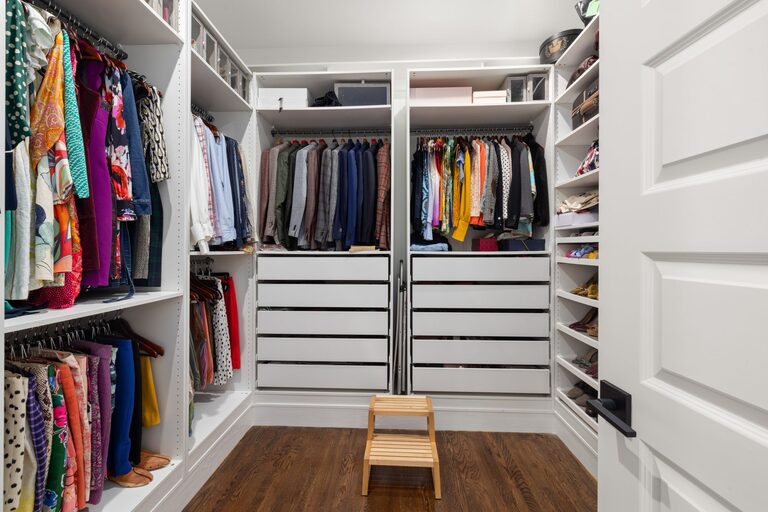
Many closets have unused space above the hanging rod or near the floor. Look upward and downward for storage opportunities.
Useful options include:
– A second hanging rod for shorter clothing
– Shelf risers for folded items
– Stackable bins for seasonal clothing
– Hanging organizers for shoes or accessories
– Hooks for bags, belts, or scarves
– Under-shelf baskets for small items
Keep frequently used items at eye level. Store occasional or seasonal items on higher shelves, but label the containers so you can find them easily later.
If you use a step stool, choose a stable one and keep it somewhere accessible. Storage that is difficult to reach often becomes storage that is forgotten.
Fold Clothing in a Way That Fits Your Space
There is no single correct folding method. The best approach depends on your shelves and how often you use each item.
For drawers, fold clothing so it can be stored vertically. This allows you to see each piece without lifting an entire stack. For shelves, use shorter stacks and place frequently worn items where they are easy to reach.
Avoid making piles so tall that they fall over when you remove something. If a stack is unstable, divide it into smaller groups or use shelf dividers.
For bulky sweaters, folding is often better than hanging because hangers can stretch the shoulders. Keep heavier items on lower shelves when possible.
Give Shoes and Accessories a Dedicated Home
Shoes and accessories can quickly make a closet look untidy because they are often small, flexible, and difficult to stack. Give each category a specific place.
Try these ideas:
– Store everyday shoes on a low rack or open shelf.
– Keep less-used shoes in labeled boxes.
– Use small bins for belts, scarves, and hats.
– Place handbags upright with light stuffing to help them hold their shape.
– Use hooks for frequently worn bags.
– Keep matching accessories together in a small container.
Avoid storing too many pairs of shoes on the floor. A shoe rack, clear boxes, or simple shelves can make the floor easier to clean and reduce visual clutter.
Create a Seasonal Rotation
If your closet is small, keep only the current season’s clothing in the most accessible areas. Store off-season items in labeled bins under the bed, on high shelves, or in another dry storage area.
Before putting clothes away, make sure they are clean and fully dry. Check for missing buttons, loose seams, or stains so items are ready to wear next season.
A seasonal rotation is also a useful opportunity to review what you actually wore. If certain items stayed untouched for an entire season, consider whether they still deserve space in your closet.
Add a Simple Maintenance Routine
An organized closet stays that way when you have a plan for putting things back. Small habits are more effective than occasional large cleanups.
Try these routines:
– Return clothing to its proper category after wearing it.
– Put clean laundry away as soon as possible.
– Place worn clothing in a hamper instead of on the floor.
– Remove one old item when adding several new ones.
– Straighten shelves for two minutes at the end of the week.
– Keep a donation bag nearby for items you no longer need.
You do not need to reorganize the entire closet every week. A quick reset can prevent small messes from becoming overwhelming.
Avoid Overcomplicated Storage Solutions
Storage products can help, but they should solve a specific problem. Before buying anything, measure your shelves, hanging space, and floor area. Consider how you use the closet and choose items that make access easier.
Avoid filling the closet with containers that are difficult to open or too large for the space. Clear bins can be useful for seeing contents, while labeled opaque bins may look tidier for items you rarely use.
The goal is not to fit the maximum number of items into the closet. The goal is to make everything easy to find, use, and put away.
Keep Your System Flexible
Your closet needs may change with your schedule, work, hobbies, and seasons. Review the setup occasionally and adjust it when necessary.
If you wear certain items often, move them closer to the front. If a category keeps becoming messy, it may need more space or a simpler storage method. An effective closet system should support your lifestyle rather than force you to follow a complicated set of rules.
With thoughtful sorting, practical storage, and a few easy habits, your closet can stay tidy without constant effort. Start small, choose a system that feels natural, and make organization part of your regular routine.